
How Often Should I Get An Eye Exam?
May 27, 2026
How Often Should I Get An Eye Exam?
You're juggling doctor appointments for your kids, parents, and spouse, but when was your last eye exam? Between managing everyone else's health, it's easy to forget about your own vision care or wonder if you're scheduling eye exams often enough for your family. Our team at EyeTech Optometry understands the challenge of coordinating family health needs while maintaining your own comprehensive eye care.
Most adults need comprehensive eye exams every 1–2 years, but your age, health conditions, and family history determine the exact timing to help keep your vision sharp and catch problems early.
Children and Teens: Building Strong Vision Foundations
Many parents are surprised to learn that a child’s first comprehensive eye exam should happen much earlier than preschool. Infants should have their first exam between 6 and 9 months of age. At this stage, your optometrist can check that their eyes are developing in tandem and check for conditions like strabismus (crossed eyes) or amblyopia (lazy eye), which are much easier to treat when caught early.
Children should usually have their first eye exam at 6 months old, then again around age 3, and annually after that unless otherwise recommended by their eye doctor. These exams help check that their vision, depth perception, and hand-eye coordination are developing properly as they grow. Because 80% of learning is visual, keeping their prescription current is one of the best ways to support their success in school and sports.
Signs to Watch For
Children often don't realize they have a vision problem; they simply assume everyone sees the world the way they do. Keep an eye out for these subtle cues that it may be time for an appointment:
- Physical signs: Red, scratchy, or watering eyes; frequent rubbing or excessive blinking; and sensitivity to light.
- Behavioral changes: Sitting too close to the TV, holding books very close to their face, or using a finger to keep their place while reading.
- Postural habits: Tilting their head to one side or covering one eye to see more clearly.
- School performance: Avoiding near work, losing their place while reading, or showing a sudden lack of concentration or irritability.
A Note on Screen Time and The Outdoors
A preschooler’s eyes aren't quite ready for long periods of intense focus on screens. We recommend taking regular breaks from digital devices. Interestingly, one of the best things for your child’s vision is simple outdoor play, which has been shown to have protective effects against the onset of myopia, or nearsightedness.
Adults and Seniors
Adults (Ages 20–64)
Even if you have perfect vision, a comprehensive eye exam is a vital part of maintaining your overall health. We recommend an exam at least every 2 years for most adults. If you have diabetes, it is important to see your optometrist at least once a year, as they can monitor the health of the blood vessels in your eyes to help manage the condition. Eye exams can also be helpful if you experience frequent headaches or migraines, as vision strain, light sensitivity, or certain visual triggers may contribute to your symptoms. In some cases, specialty lenses, such as Avulux lenses, may help decrease migraine-related light sensitivity and support more comfortable day-to-day vision.
Adults 40 and Over
After age 40, your eyes begin to change more rapidly. You may notice presbyopia, a natural shift that makes it harder to focus on close objects or requires more light for reading. This stage of life also brings an increased risk for silent conditions like glaucoma or macular degeneration. Because these often have no symptoms until they are advanced, regular check-ups are the only way to protect your sight.
Seniors (Ages 65+)
To maintain independence and quality of life, seniors should move to annual eye exams. This age group is at a higher risk for cataracts and low vision. Yearly visits allow our team to detect changes early, ensuring your vision remains clear and your eyes stay healthy for years to come.
Health Conditions That Change Your Eye Exam Schedule
Diabetes and Your Eye Health Timeline
If you or a family member is living with diabetes, comprehensive eye care is an essential part of your management plan. We recommend that adults with diabetes have a comprehensive eye exam at least once a year.
Because high blood sugar can weaken and damage the tiny blood vessels in the retina, regular exams are the most effective way to detect diabetic retinopathy. This condition often develops without any noticeable changes to your vision in its early stages; however, catching it early allows for treatments that can prevent significant vision loss. Your optometrist acts as a key member of your healthcare team, monitoring these subtle internal changes and coordinating directly with your family doctor to ensure your sight is protected.
Family History and Genetic Risk Factors
When glaucoma, macular degeneration, or other eye diseases run in your family, you need more frequent monitoring. Your eye doctor might recommend exams every 6–12 months rather than waiting longer.
Don't forget to mention your family's eye health history during appointments, as this information helps determine your personalized exam schedule.
Warning Signs You Need an Eye Exam Sooner
Vision Changes That Can't Wait
Some symptoms mean you should call an optometrist right away, regardless of when your last exam was:
- Sudden blurry or double vision
- New flashes of light or floaters
- Partial vision loss or dark spots
- Difficulty driving at night
Understanding eye emergency symptoms helps you know when to seek immediate care versus scheduling a routine appointment.
Eye Discomfort and Pain Signals
Physical symptoms affecting your eyes also need prompt attention:
- Persistent eye pain or pressure
- Severe headaches with vision changes
- Unusual light sensitivity
- Redness or irritation lasting more than a few days
.jpg)
What Happens During Your Comprehensive Eye Exam
Vision Testing and Prescription Updates
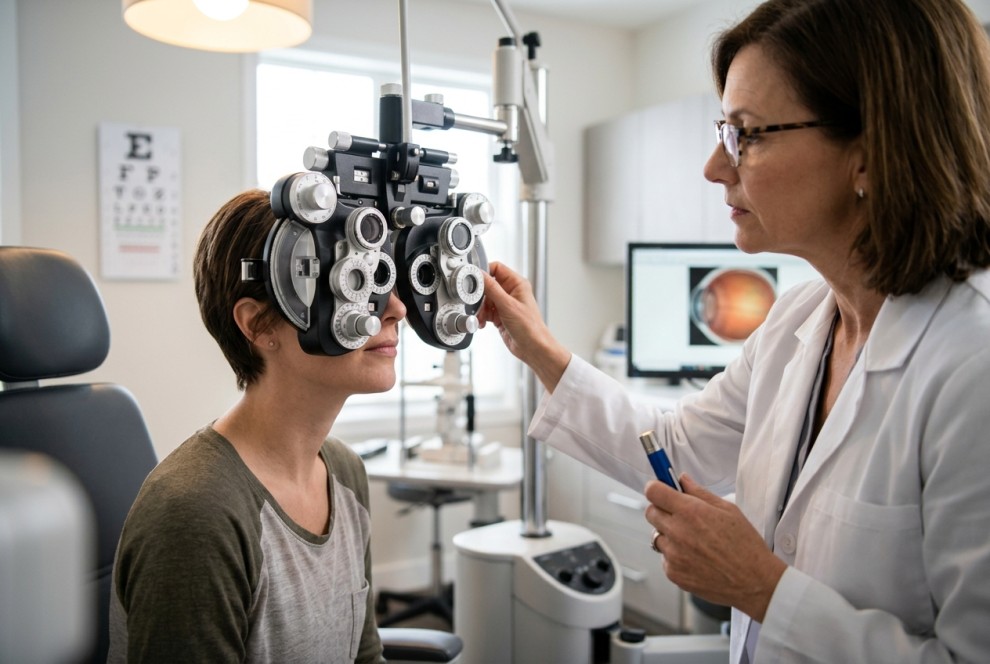
Your eye doctor checks how clearly you see at different distances and tests your peripheral (side) vision. If you wear glasses or contacts, the eye doctor can determine whether your prescription needs updating to keep your vision sharp.
Our team uses diagnostic technology to provide detailed insights into your eye health beyond basic vision testing.
Eye Health Screening and Disease Detection
Comprehensive exams include tests that can detect glaucoma, cataracts, and macular degeneration before you notice symptoms. They also allow your optometrist to look for signs of dry eye, a common condition that can cause irritation, burning, watering, or fluctuating vision. Early detection of these conditions gives you more treatment options and better outcomes.
For conditions like dry AMD, specialized treatments such as MacuMira can help slow progression when started early.
The "Window" to Your Health
An eye exam does more than check your prescription; it offers a noninvasive look at your systemic health. Your optometrist can often find early signs of life-threatening issues, such as hypertension, cardiovascular disease, and certain neurological conditions, long before symptoms appear elsewhere in the body.
Come See Us
Regular eye exams protect your vision and overall health while catching problems when they're most treatable. Eyetech Optometry of Richmond provides comprehensive eye care for families, with convenient scheduling and direct insurance billing to make quality vision care accessible. Schedule your family's next eye exams and take the first step toward maintaining clear, healthy vision for years to come.
We're here to help,
Dr. Lima